
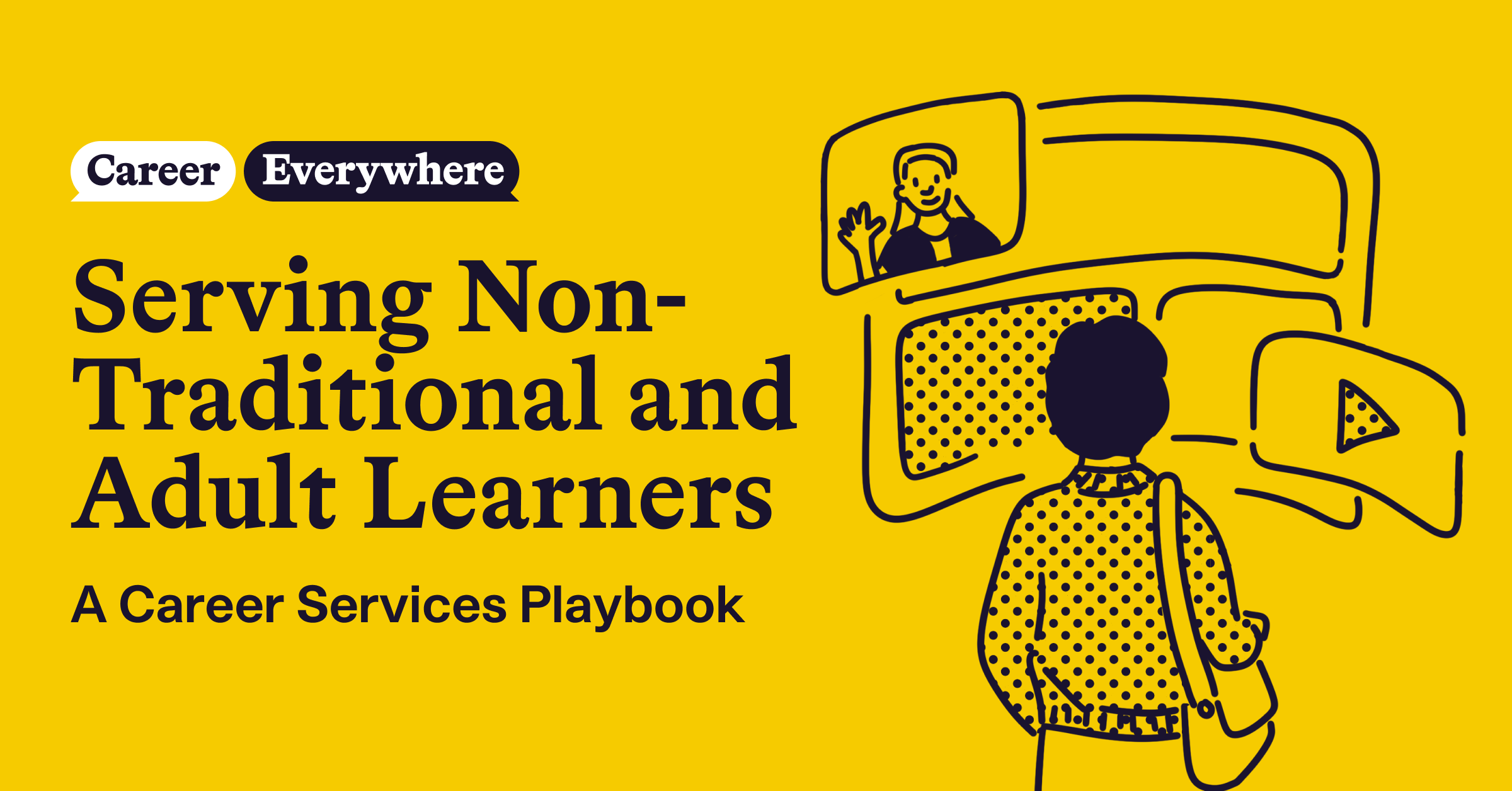
The face of higher education is changing. Today’s college students are increasingly likely to be working full-time, raising children, caring for aging parents, serving in the military, or returning to school after years in the workforce. They’re logging into class from living rooms in rural New York, from military bases, from kitchen tables at midnight after the kids are in bed.
And yet, career services models at many institutions were largely built for a different student: the traditional 18-to-22-year-old who lives on campus, takes classes full-time, and has four predictable years to explore and prepare.
That gap is widening—and career services leaders who want to stay relevant need to close it.
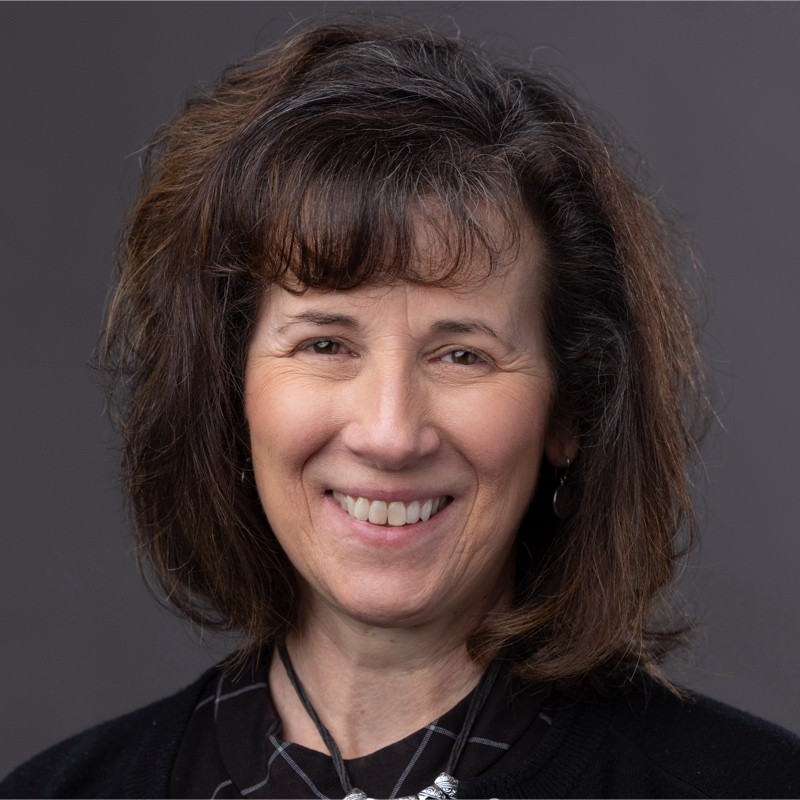
Anita DeCianni-Brown has been doing exactly that for more than a decade. As the Director of Career and Experiential Learning Services at SUNY Empire State University—a largely online public institution where over 50% of students work full-time—she built a career services program from scratch in 2014 and has been refining her approach to non-traditional learners ever since.
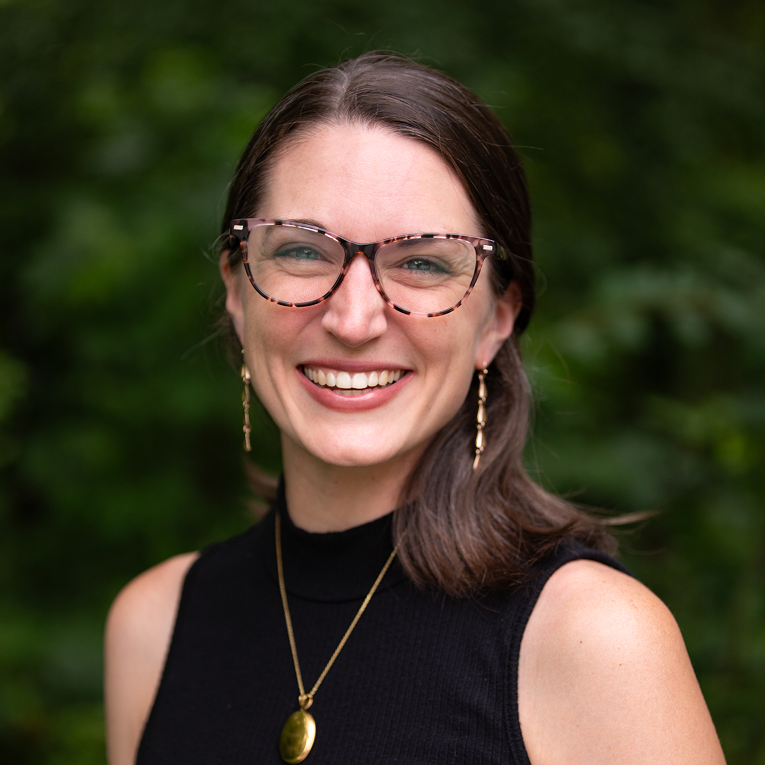
Amy Ballard, Online Career Coach at Eastern University, is doing something similar. She joined Eastern in January 2025—a private institution approaching 10,000 students, two-thirds of whom are online—and built its online career development program from the ground up. Her student roster runs the full gamut: from 18-year-olds to 65-year-olds, from students in rural areas managing family responsibilities to established career professionals transitioning out of corporate careers into social work.
Here’s what she, DeCianni-Brown, and other leaders serving similar populations have learned.
1. Rethink how you categorize (and talk to) your students
The first shift is conceptual. When you’re serving non-traditional learners, the traditional framework of freshman, sophomore, junior, senior doesn’t map onto their experience.
DeCianni-Brown uses a different lens entirely: career starters, career transitioners, and career advancers.
“Career starters doesn’t just mean a traditional college-age student,” she explained on the Career Everywhere Podcast. “It means somebody who says, ‘I’ve worked a lot of jobs in my life, but now I want a career.’ That’s a career starter.”
Someone pivoting from one industry to another is a career transitioner. Someone pursuing a degree to move up in a field they’re already in is a career advancer. Each of those profiles comes with different needs, different anxieties, and different definitions of success.
Ballard found herself thinking about her student population along similar lines. Rather than offering broad programming that tried to speak to everyone, she found it far more effective to get specific: “This webinar is more focused on folks who are early career. This one is more focused on folks who are career changers.”
Getting clear on who you’re talking to before you design anything, she argues, is what determines whether students feel seen—or skip the event entirely.
The language you use matters too. Brenna Gomez, Director of Career Integration at Oregon State University, which serves a large online adult learner population through its e-campus, noted that the phrase “career readiness” can actually alienate the very students you’re trying to reach.
“For someone who already has an established career, they might tune out if you’re just speaking about career readiness,” she said on the podcast. “They’re looking for career advancement.”
Getting the framing right—in your marketing, programming, and one-on-one conversations—signals to non-traditional students that you see them and understand where they are.
2. Don’t assume—even with experienced students
One of the most important mindset shifts DeCianni-Brown emphasizes is this: lived experience and career experience are not the same thing.
“Just because somebody is 30 or 40 years old, they do have their lived experiences, but maybe not necessarily that career experience,” she said. “I’ve had students say, ‘I’ve worked many jobs, but now I’m pursuing a career.’ So realizing that not everybody is familiar with all the things that we as career professionals are aware of.”
That means career services teams shouldn’t skip the fundamentals with adult learners—they may need just as much guidance on how to write a resume, navigate LinkedIn, or prepare for a behavioral interview as a 19-year-old does. What differs is how you frame it.
DeCianni-Brown recommends always explaining not just how to use a tool or resource, but why—connecting it explicitly to the student’s specific situation and goals.
“If I’m going to spend my time on this, how is this going to help me?” she said. “What am I going to be able to find out about myself?” That’s the question non-traditional students are asking, and career teams need to answer it.
Ballard, who comes to career services from a background in adult education, draws on Malcolm Knowles’ theory of adult learning to inform her approach. Adult learners, Knowles argues, want to know the why behind what they’re doing, are self-motivated, bring their own experience to the table, and can self-direct when given the right tools and platforms.
The practical result: she makes sure every resource, workshop, and event connects clearly to students’ existing knowledge and answers the unspoken question, “Why should I care about this right now?”
She also noted something she sees frequently with online adult students: they can carry a sense of isolation and disconnection from one another—and from the institution itself. In one-on-ones, students would tell her their situation was unique. “I’m a parent. I have 15 years experience teaching in schools, but I realized that I really want to pursue data science.”
What she began saying to them: “Actually, I talked to three other people who were doing that this week.” The perceived uniqueness of their situation was often shared by many—they just hadn’t had the chance to find each other yet.
She also noted something DeCianni-Brown has observed at SUNY Empire: adult learners often carry a sense of embarrassment or guilt about being in school at this stage of their lives.
“They apologize for being in school at this time,” DeCianni-Brown said. “They feel like they have to say sorry because they are just starting school now, or they went to school before and stopped out, and now they’re back.”
Acknowledging that dynamic—and actively countering it with affirmation and encouragement—can make a significant difference in whether a non-traditional student engages with career services at all.
3. Scale career services through technology, programming, and more
Here’s the math problem most career centers serving non-traditional populations face: the student-to-staff ratio is enormous, and the population is geographically dispersed. You simply cannot serve these students the way you might serve a traditional residential campus population.
DeCianni-Brown knows this well. For most of her time at SUNY Empire, she was a team of one supporting more than 17,000 students. Today her team has grown to four, but that’s still a lot of ground to cover.
Rebekah Paré, founder of Paré Consulting and former longtime career services leader, put it plainly when describing a similar situation on the Career Everywhere Podcast. A community college career leader she worked with had between 11,000 and 14,000 students a semester and no staff support.
“The first thing I said to her is, ‘You cannot do one-on-ones,’” Paré said. “You really need to think about the one-to-many types of services and the self-service experiences that run themselves.”
Ballard faced the same math at Eastern. As the sole staff member dedicated to online students—in a center of four total—she recognized quickly that even if she met with a student every hour of every available day, she could still only reach about 40 students per week.
“How can I make it accessible to everyone in other ways,” she asked herself. “And how can I meet larger groups of people on common needs and common interests that they have?”
Her answer was to build programming that scaled.
When she noticed she was answering the same questions about data science capstone projects over and over in individual appointments, she partnered with the data science department to create a webinar that addressed those questions at scale—and recorded it for asynchronous access. The first time it ran, it drew over 230 registrants, with more than half attending live and additional students watching the replay. What had been a series of one-on-one conversations became a self-sustaining resource.
For DeCianni-Brown, a core part of the solution has been building out a central virtual career hub—powered by uConnect—where students can access resources, job postings, career assessments, and interview practice tools at any time, from anywhere.
The impact was almost immediate. Integrating Handshake directly into the hub drove a 300% increase in student applications.
“I think it brought the platform a little bit more front and center,” she said. “Students are signing up for automated emails, they’re getting notifications, and they’re seeing those teaser opportunities on the career pathways pages.”
Before the hub existed, those resources were technically available—they just weren’t visible or easy to find. The virtual career center changed that.
DeCianni-Brown also made a point of not building the hub in isolation. She gave tours to every office in her division, shared it with faculty chairs, and asked for feedback before launch—ensuring that colleagues across campus could direct students to it confidently. That cross-campus buy-in has helped the hub function as a true institution-wide resource, not just a career center website.
Western Governors University, a fully online university serving approximately 190,000 students, faced a similar scaling challenge. With a career team of just seven staff members supporting that population, Senior Manager of Career Education and Advising Bonnie Monteleone knew technology had to do the heavy lifting.
“I’m never going to be able to hire enough advisors to support the number of students that we have,” she said. “I needed to really rely on digital technology to help scale our services, and I knew uConnect could help us create a better user experience.”
After partnering with uConnect to centralize its scattered career tools and content into a single, branded virtual career center, WGU saw a 140% increase in page views and a 158% boost in video engagement within two months of launch. But for Monteleone, the bigger picture goes beyond the metrics.
“We want to provide a career experience where the learner selects what they want it to be. They own that experience, and it helps our office scale,” she said. “We serve approximately 190,000 students, as well as another 340,000 alumni for life. Leveraging uConnect has been really helpful and will only continue to be helpful as we create individualized career journeys for each student at scale.”
The throughline across SUNY Empire, Eastern University, and WGU is the same: when your students are dispersed, busy, and can’t reliably make it to a physical career center, your virtual presence isn’t a nice-to-have—it’s an absolute necessity. It’s your “welcome mat” and your first impression.
Making it centralized, intuitive, and available around the clock is one of the highest-leverage investments a career team serving non-traditional learners can make.
Learn how uConnect’s Virtual Career Center platform can help you scale your online presence, reach every student, and improve outcomes. Schedule a demo.
4. Be radically flexible with timing and format
Non-traditional students don’t have the luxury of dropping by the career center between classes. They’re squeezing in what they can, when they can—and career services teams need to design their offerings accordingly.
DeCianni-Brown has built flexibility into nearly every aspect of how her team delivers programming. Live events are always recorded and shared afterward. Resources are housed on the Career Hub so students can access them on their own schedule. When her team runs its “Ask5” series—short career conversations with a guest answering five questions—the recordings go directly onto the hub and get shared with faculty, who can then pass them along to students in whatever context makes sense.
Ballard echoes this commitment to flexibility at every level. She keeps most live events under 30 minutes—often shorter—because her students are joining on lunch breaks or, as she put it, “taking a shift off of doing bedtime duty that night so they can jump online to get connected.”
She’s also expanded beyond Zoom to platforms like Gatherly, a gamified virtual space where students can move between themed conversation “booths,” which she finds particularly effective for networking events. When one networking event drew only a single student, she didn’t write off the format—she used it as a signal to rethink structure, not to abandon the idea.
Ballard also learned to account for the rhythms of online-only populations. She schedules drop-in hours as late as 8:00 or 9:00 p.m. to reach students in time zones that can’t engage during traditional office hours—and she maintains a 24/7 online presence through her virtual career center (powered by uConnect), where students frequently log in at 3:00 a.m.
The spirit behind all of it, as DeCianni-Brown describes it, is meeting students where they are—whether that means geography, career stage, life circumstances, or time of day.
This isn’t just good practice for non-traditional learners. Paré notes that it’s increasingly the expectation for all students.
“It’s not always going to be your traditional 18-to-22-year-old who is a full-time college student and that’s their sole responsibility,” she said. “Modern career services has to be accessible at whatever time of day a student is ready to engage.”
5. Build a “welcome mat” that explains the why, not just the what
One of the most practical strategies DeCianni-Brown has developed is what she and her colleagues at SUNY Empire call the “Career Toolkit.” Built as a discovery course in Brightspace (where SUNY Empire students already are), the Career Toolkit walks students through the full career process in plain, accessible language. The kit breaks down career development into six clear steps, from exploration through job search, and explains not just how to use each tool available to them, but why it’s worth their time.
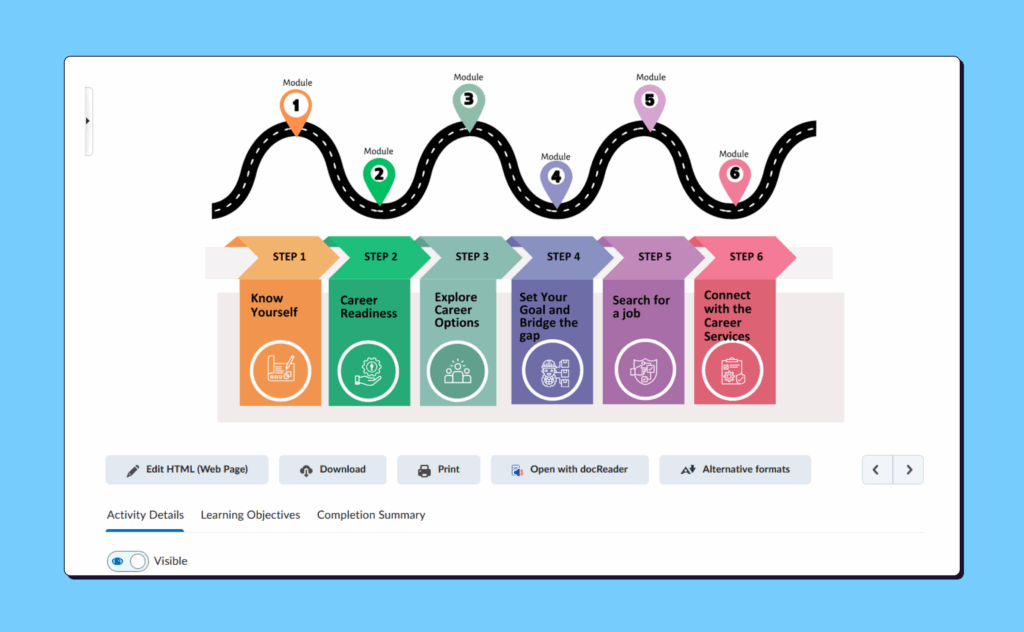
The inspiration, she shared, came from thinking carefully about what a welcome mat looks like for an online university serving adult students.
“Why should you be using Handshake? How can you be using Handshake? Why should you use FOCUS 2? What’s the advantage of practicing your interviewing skills on BigInterview? How can you use labor market data to evaluate the job market?” The kits answer those questions proactively—before a student has to come in and ask.
Ballard takes a similar approach to onboarding students into the online career center experience. Her team created a “Welcome to Our Virtual Career Center” video on Eastern’s main career hub page to help students navigate and quickly understand what’s available to them. She’s also worked to ensure that career community pages surface the top three most-requested resources for each program prominently—so students don’t have to hunt. And she makes sure the call to action to schedule an appointment is among the first things students see when they land on the page.
This kind of intentional onboarding matters especially for non-traditional students, who may not have the same informal networks of peers or family members who have been through the career center before and can give them a heads-up on what to expect. For many adult learners, career services is an entirely unfamiliar concept. The welcome mat is how you introduce yourself—and make it immediately clear why they should care.
6. Partner across campus to reach students where they already gather
If there’s one lesson Ballard would add to the playbook, it’s this: stop trying to draw students to you, and start showing up where students already are.
At Eastern, she discovered that the MBA program was already hosting a monthly gathering that regularly drew 50 to 75 online students. Rather than competing with that or trying to replicate it, she partnered with the program to bring career development into it.
“There’s already a built-in audience,” she said, “and here are folks who maybe haven’t heard about some of the resources that are available to them through the Center for Career Development.”
She’s applied the same principle across departments. When data science emerged as Eastern’s largest online program, she worked with that department to surface the most common student questions and answer them at scale through a webinar. For MSW students, she aligned webinar programming with internship deadlines. For psychology students, whose schedules made live events difficult, she developed asynchronous resources tailored to their specific needs.
The through-line: figure out what each program’s students most need, and build or curate something that speaks directly to them.
Faculty buy-in, she emphasizes, creates a multiplier effect.
“Buy-in begets buy-in,” she said. “The more our faculty and staff can see what work is happening, the more our students are likely to also buy into that.”
When faculty see career services as a genuine partner—not a separate silo—they become informal ambassadors who direct students to resources at the moments they’re most relevant.
Conclusion
Serving non-traditional and adult learners well isn’t about overhauling everything you do. It’s about examining the assumptions baked into how you’ve always done it—and making intentional adjustments to the language you use, the hours you’re available, the format of your resources, and the way you categorize and communicate with the students you serve.
As DeCianni-Brown has demonstrated over more than a decade at SUNY Empire, and as Ballard is showing in her early years building Eastern’s online program, it’s entirely possible to build a thriving, high-impact career services program for a largely online, non-traditional population—even as a small team. It just requires a willingness to think differently about who your students are and what they actually need.
To hear more from Anita DeCianni-Brown on scaling career support for non-traditional students, check out her episodes of the Career Everywhere Podcast: Episode 77 (her solo interview) and Episode 82 (a panel discussion on scaling career services as a small team).
To hear Amy Ballard discuss her approach to online career development at Eastern University, check out Episode 93.
Explore 15+ examples of virtual career centers built on uConnect that serve largely online student populations.
To learn how uConnect’s virtual career center platform can help your career center engage online and non-traditional students, request a demo below.